


How to Use SPACE to Measure Inclusion In Engineering Teams
Expand a popular developer framework to support your inclusion efforts.

Inspired by:
Jossie Haines, Executive Coach Empowering Women Leaders to Thrive in Tech | ex-VP of Engineering
🚀 Inclusion
When Leadership Coach Jossie Haines left a previous role in 2018, she left because of the cumulative toll of gender-based microaggressions.
On the most productive teams, each person has what they need to thrive. Jossie says that you can build this support most effectively by recognizing and appreciating everyone’s differences, but admits this can be very difficult to start.
She suggests using the SPACE framework with additional questions to measure inclusion in your team.
📊 SPACE
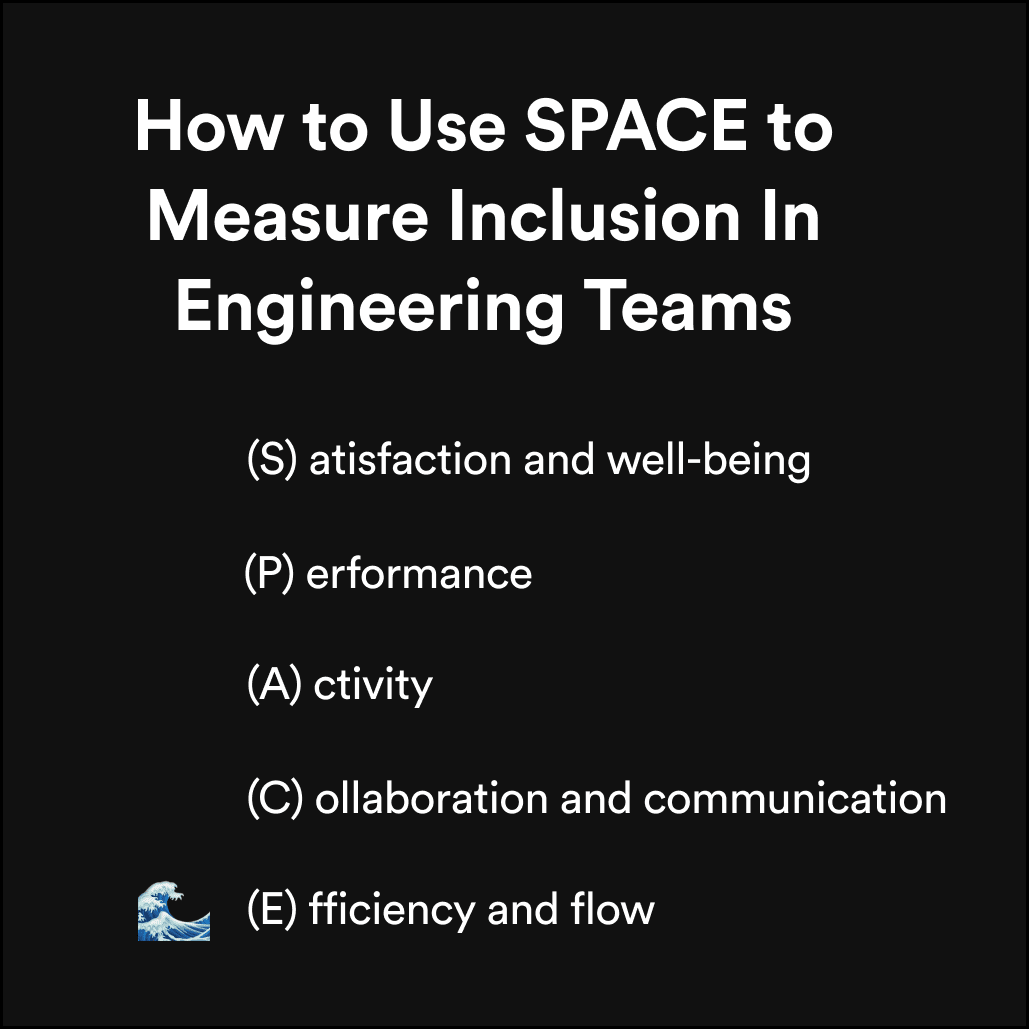
😊 (S) atisfaction and well-being 📈 (P) erformance 💫 (A) ctivity ☎️ (C) ollaboration and communication 🌊 (E) fficiency and flow
Jossie recommends setting up a survey (using a tool like Typeform) to ask questions related to each pillar of SPACE.
In 1:1s or a team touchpoint, let your team members know that you want to find out about their experience so that they have what they need, and you can do a better job of supporting them.
You can run this survey with your team monthly or quarterly and she recommends finding ways to include your team in evaluation process of the results.
Let’s jump into SPACE!
😊 Satisfaction and well-being
Ask: Do you feel comfortable sharing your ideas and contrary opinions?
Do you feel that you do more “chores” (taking notes, following up on tasks, etc) than your colleagues?
An inclusive environment has a tremendous impact on developers' satisfaction and well-being.
This is important because a decline in satisfaction and engagement could signal upcoming burnout and reduced productivity.
📈 Performance
Ask:
Do you feel that our product is giving all customers a high-quality experience?
You can also ask your users or customers:
Did you have any issues with the product, or what issues might someone have?
Often when we discuss performance, we think about quality: to what extent does each developer's work positively impact the product? As part of this question, engineering leaders can also ask: how does inclusion impact the quality of developers' work?
This is important because inclusion should be lived internally and externally!
💫 Activity
Ask:
How do you feel about our team’s communication and feedback about processes?
Jossie suggests going beyond pure output (example: amount of code reviewed) to understand How do our processes impact employee experience? You are looking for empathetic language and feedback around how people ‘feel’. High output can be doing more harm than good in certain parts of the process. Capturing this will help build empathy into your processes at scale.
☎️ Collaboration and communication
Ask: How much do you feel like you can participate in team discussions?
Do you feel like your perspective is valued by your team?
When you meet as a team, is everyone actively engaging and contributing? Power dynamics related to factors like race and gender can prevent some team members from feeling included.
This is important because diverse and inclusive teams are higher performing. They are more likely to be successful at brainstorming new ideas, they work on the right problems, and will choose better solutions from all the alternatives.
🌊 Efficiency and flow
Ask:
Do you feel you have enough focus time to get your deep work done?
Efficiency and flow are your team’s ability to make progress with minimal interruptions or delays. It’s important to remember higher efficiency doesn’t always mean a better system.
You are looking for whether anxiety in the workplace could be making it more difficult to get into a productive flow because team members are telling themselves their opinions are not valued or they are afraid to set boundaries that benefit their work.
🎉 Getting started
The challenge with inclusion is knowing where to begin. Using this technique can jumpstart your inclusion efforts by helping you get started.
The data you gather using this technique will help you to implement and refine inclusive management practices that make your teams more productive!
Become a world-class leader in two minutes a day